Clarity on Your Software Architecture
Know where your software really stands — and what makes sense next. My Architecture Review gives you an honest assessment and actionable recommendations.
Request Architecture Review
Who is the Architecture Review for?
A Solid Basis for Your Roadmap
You're a CTO, Tech Lead, or Engineering Manager — and you need a neutral, external perspective on your architecture.
- An independent assessment of your architecture, free from internal blind spots
- Clear risk evaluation: where technical debt is critical, where it's acceptable
- Prioritised recommendations you can integrate directly into your roadmap
- A structured result you can use internally as a basis for decisions
An Honest Assessment, Clearly Explained
You're a Managing Director or in a business-facing role — and you want to understand where your software really stands.
- A comprehensible evaluation of your software situation without technical jargon
- Transparency on where your development team stands and what it needs
- A clear assessment of whether your technology fits your current business phase
- Actionable recommendations with effort estimates you can evaluate commercially
What You Actually Receive
Diagnosis with Risk Assessment
Where does your architecture stand, and where is it becoming critical? A systematic review with a clear assessment of which risks need immediate attention and which are acceptable.
Prioritised Recommendations
Not an endless list, but recommendations sorted by urgency and effort. You see what makes sense next — and what can wait.
Structured Final Report
All findings in one document that is understandable for both technical and non-technical stakeholders. Serves as a basis for decisions and roadmap input.
Implementation Support optional
If needed, I work with your team on implementing the recommendations — not just as an advisor, but hands-on in day-to-day operations.
Overengineering as a Challenge in Mid-Market Companies
Software in small and medium-sized companies is often more complex and extensive than necessary for its intended purpose.
Examples of Overengineering:
- Why do you need a microservice architecture when you only have 10 developers?
- Why choose serverless when you only need a simple CRUD application?
- Why implement Kubernetes when 95% uptime would be acceptable for your customers?
Mid-market companies shouldn't pay the costs for highly available applications. They simply lack the personnel!
Large enterprises achieve high availability with hundreds of developers. They build complex software and share these experiences at conferences and in trade magazines. It's these reports that create the impression in mid-market companies that they must apply the same principles.
The consequences: missed opportunities, unprofitable businesses, and growth barriers due to long development times.
More on this topic can be found in my blog post.
The Solution:
Support from an
external expert
As Head of Engineering at a service company, I was once responsible for mid-market projects myself. I know the challenges.
The biggest problem in many teams: overengineering. I tried to solve the problem independently by recruiting experienced developers, but competition with large enterprises made this significantly difficult. I also invested in team training, which proved to be lengthy and ineffective for acute problems. The teams had difficulty recognizing and correcting their poor decisions. Finally, I worked directly in the team myself, which proved to be inefficient micromanagement and offered no sustainable solutions. Overall, all these strategies did not lead to the desired success.
Finding the right balance between over- and under-engineering requires years of experience and personally lived responsibility across a variety of projects.
You need someone who knows, understands, and has successfully solved the special challenges of mid-market companies.

"Everything should be made as simple as possible, but not simpler."
Albert Einstein
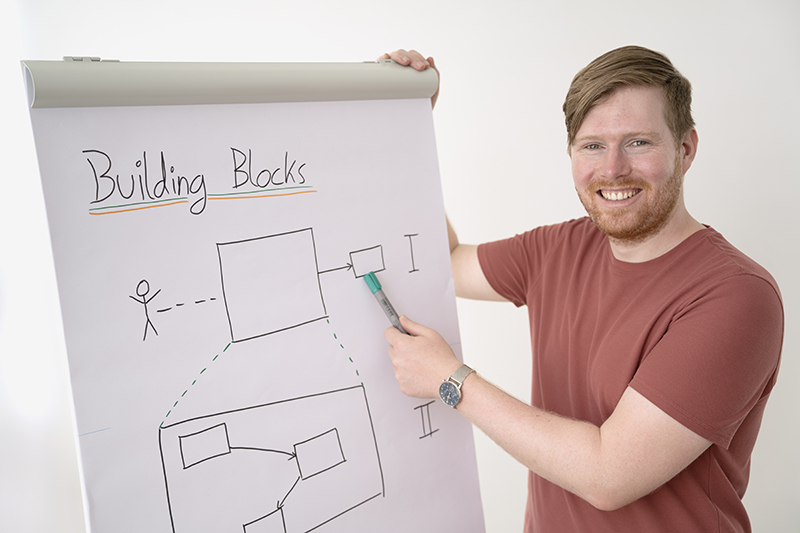
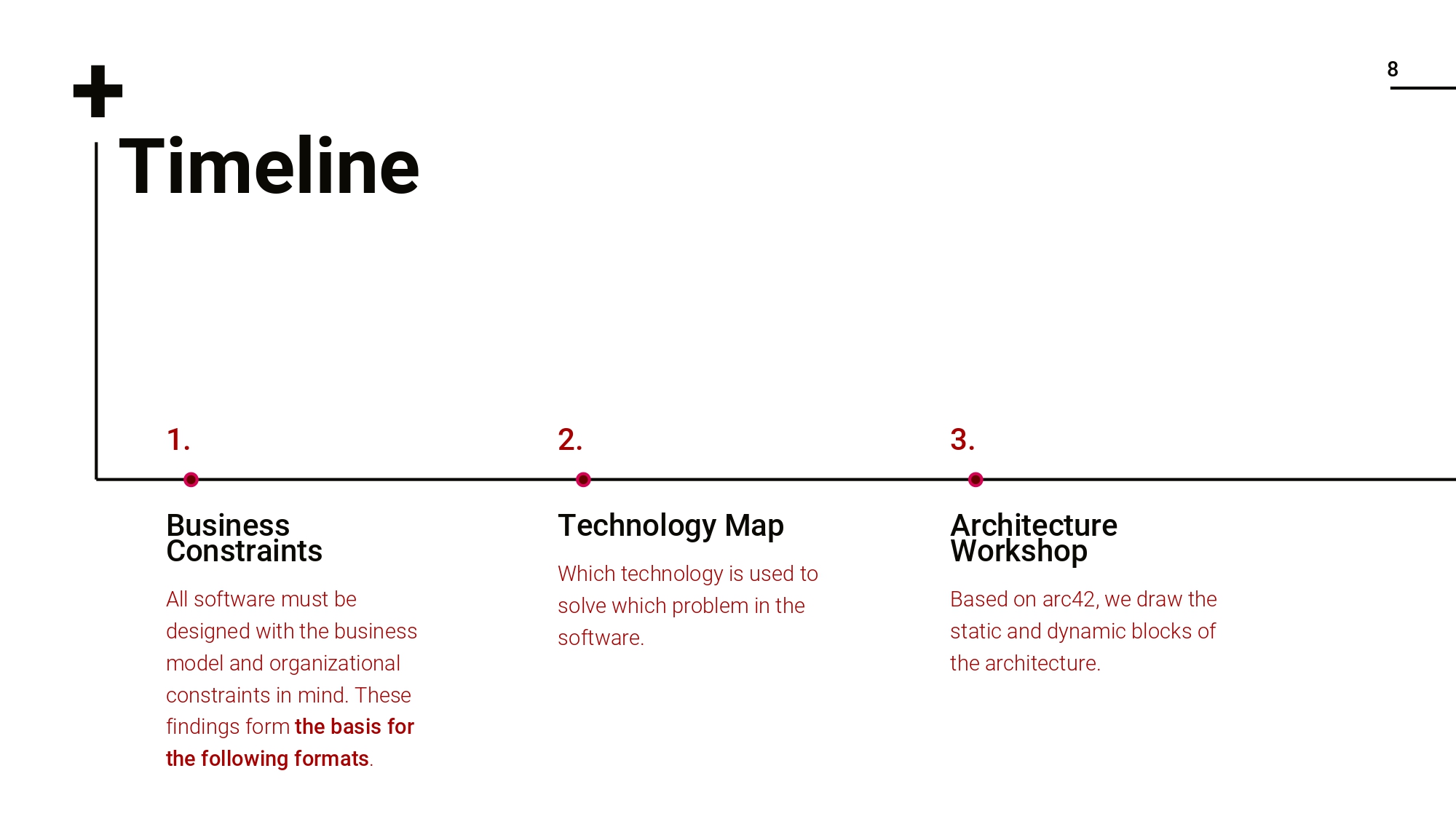
7 Building Blocks, One Clear Picture
Each building block provides a distinct perspective on your software — together, they form a well-founded overall assessment.
Business Context
The foundation: Analyze and prioritize business requirements.
The business context significantly shapes the architecture and technology decisions of your software. Together with your relevant stakeholders (CEO, Sales Manager, Product Owner), we analyze this framework to create optimal decision-making foundations. Using ISO 25010 , the most important quality requirements for your software are determined, and based on this, priorities for all further analyses are established.
Technology Overview
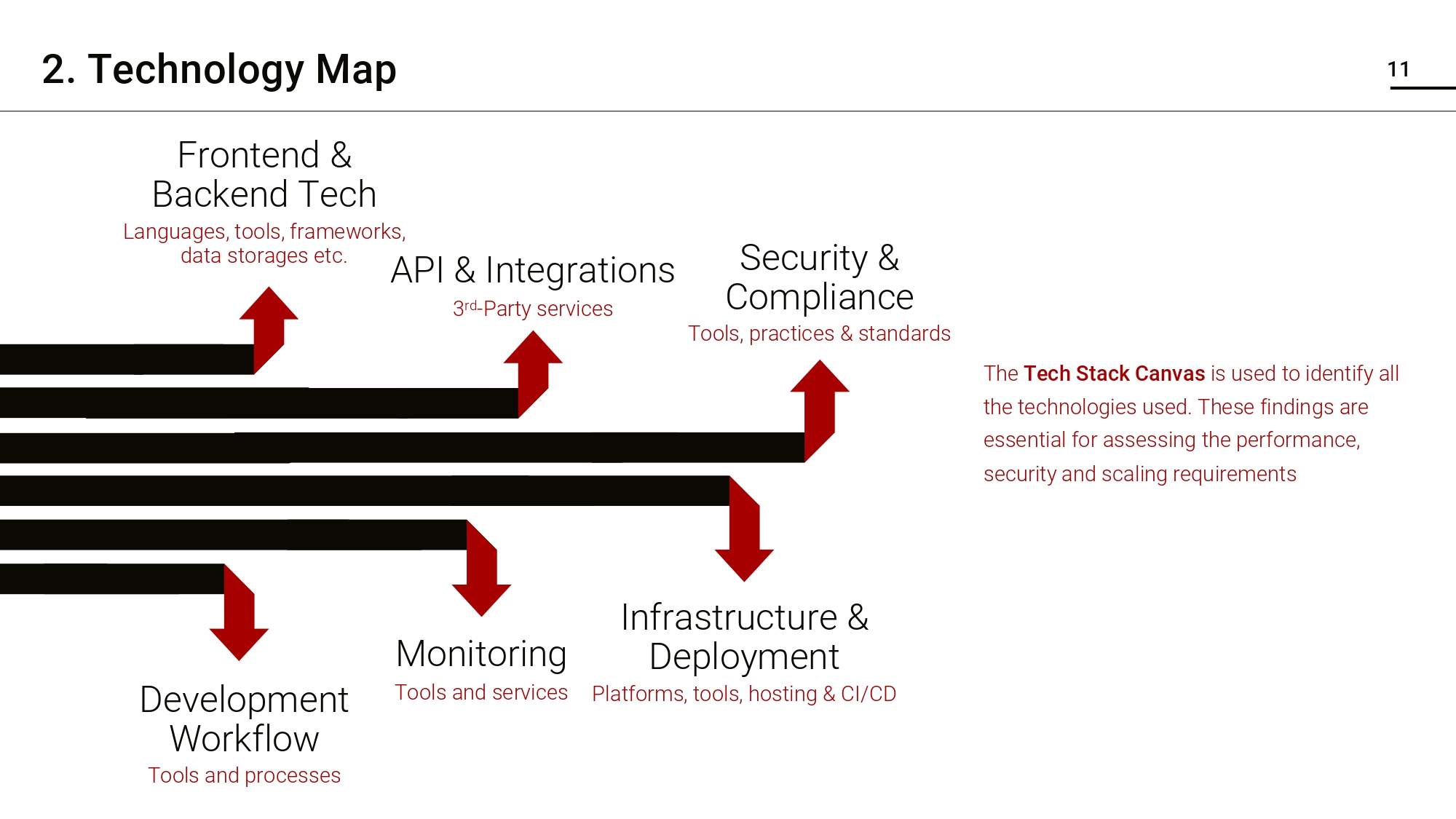
Create transparency: Systematically capture technologies and their areas of application.
Using the Tech Stack Canvas , your entire technology stack is systematically documented. This transparency enables you to specifically identify strengths and detect potential weaknesses in performance, security, or scalability early on. You get a complete picture of your technological landscape.
Architecture Workshop
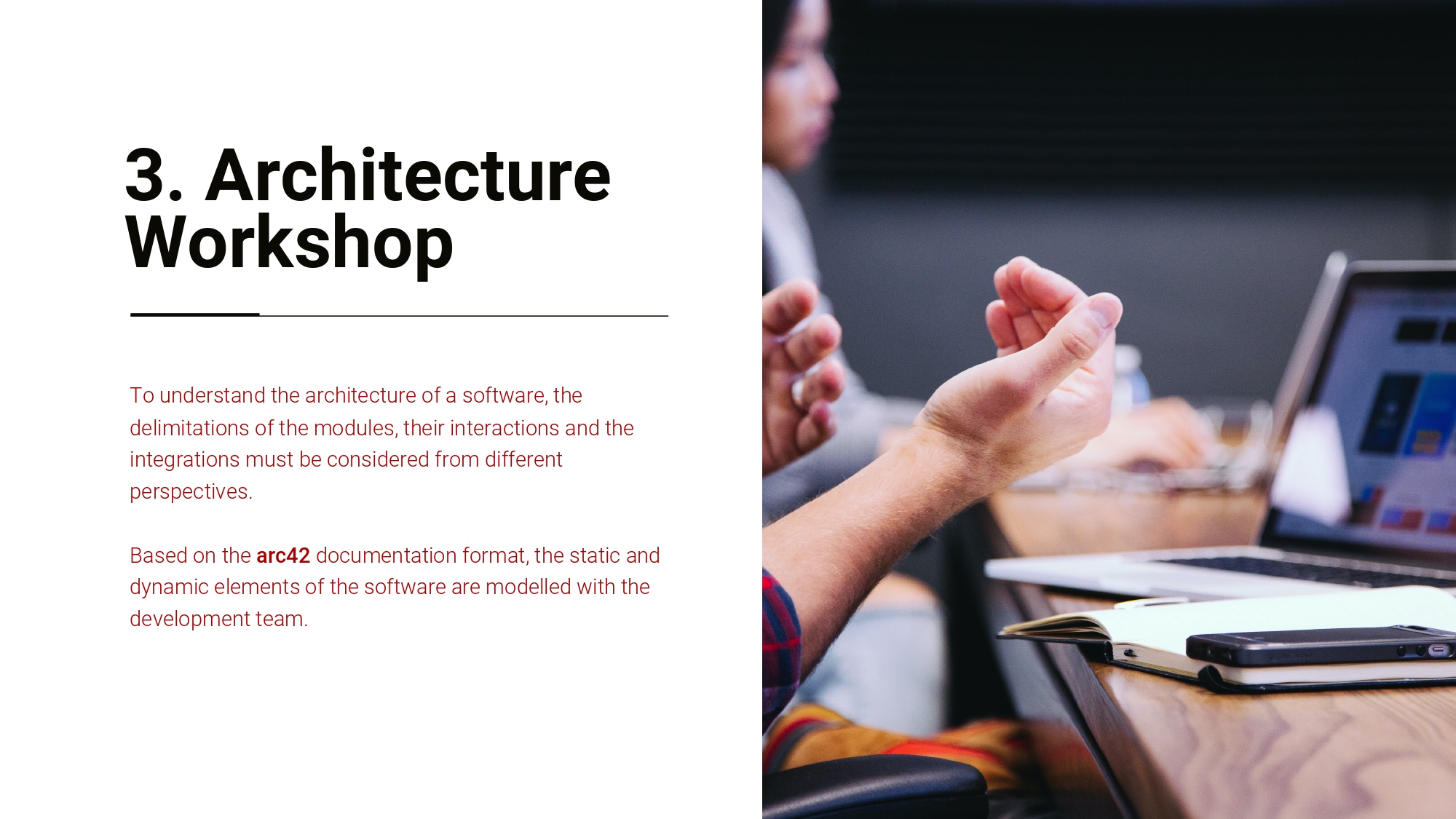
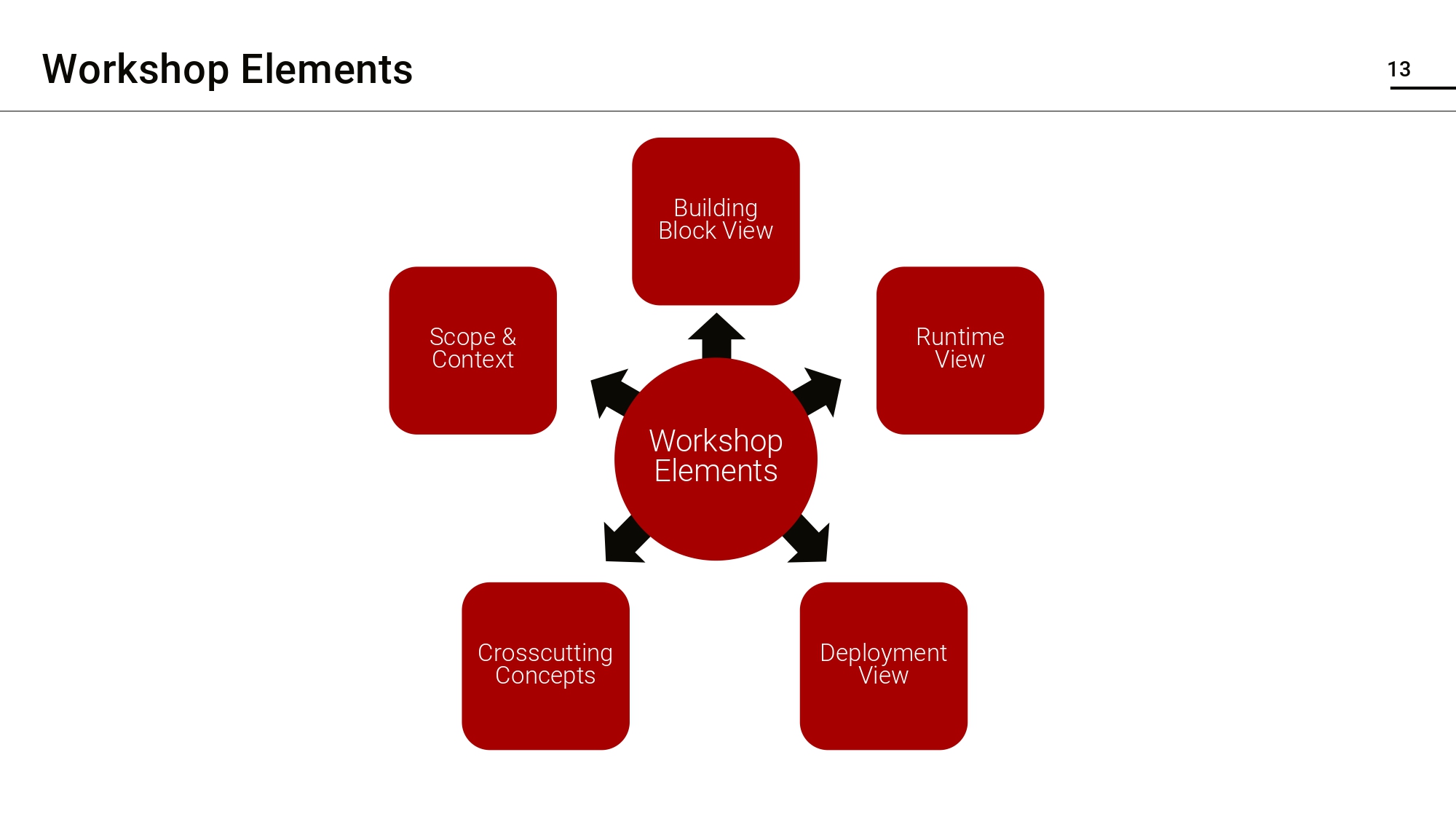
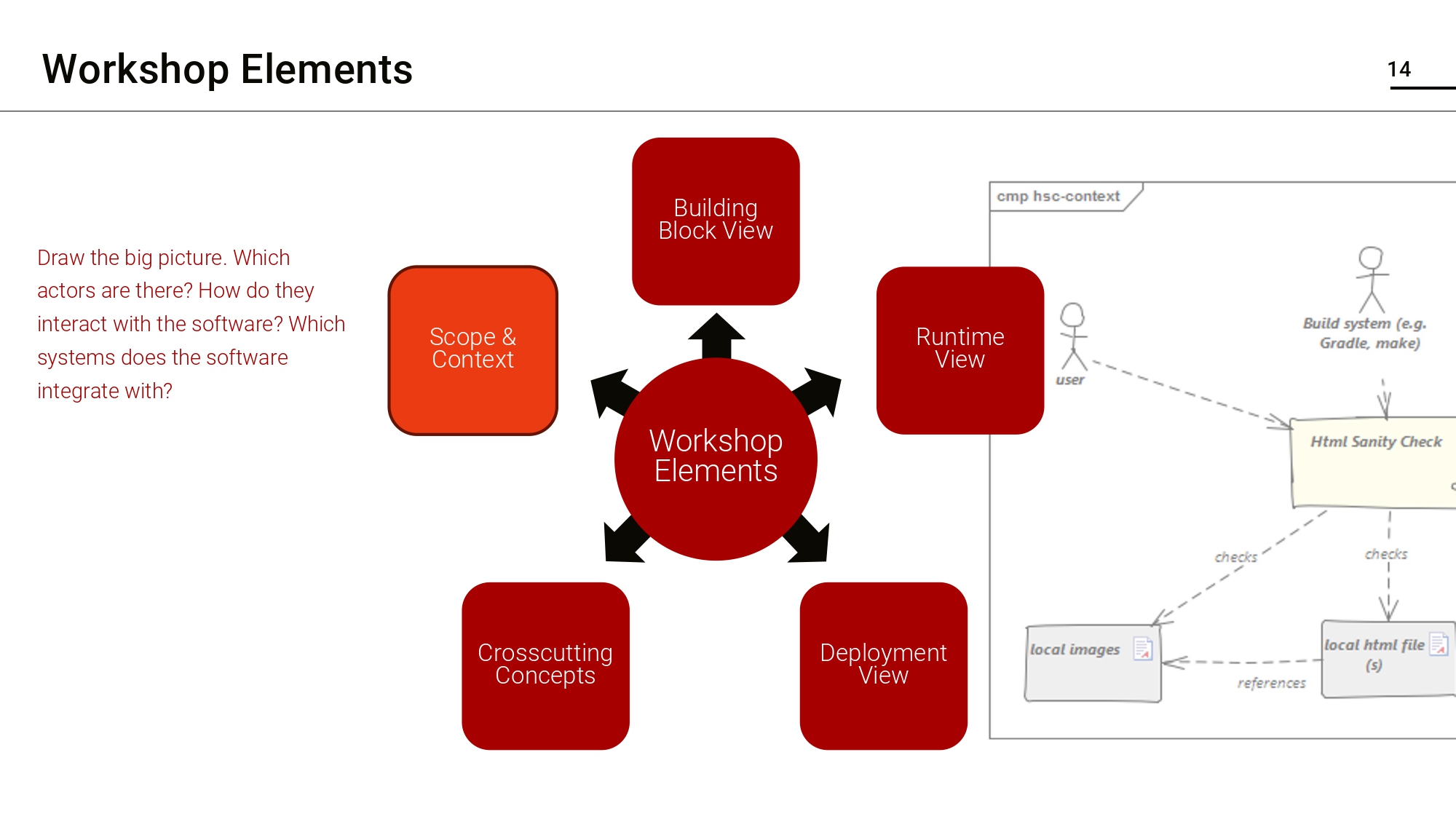
Make architecture visible: Model structure, modules, and interactions together.
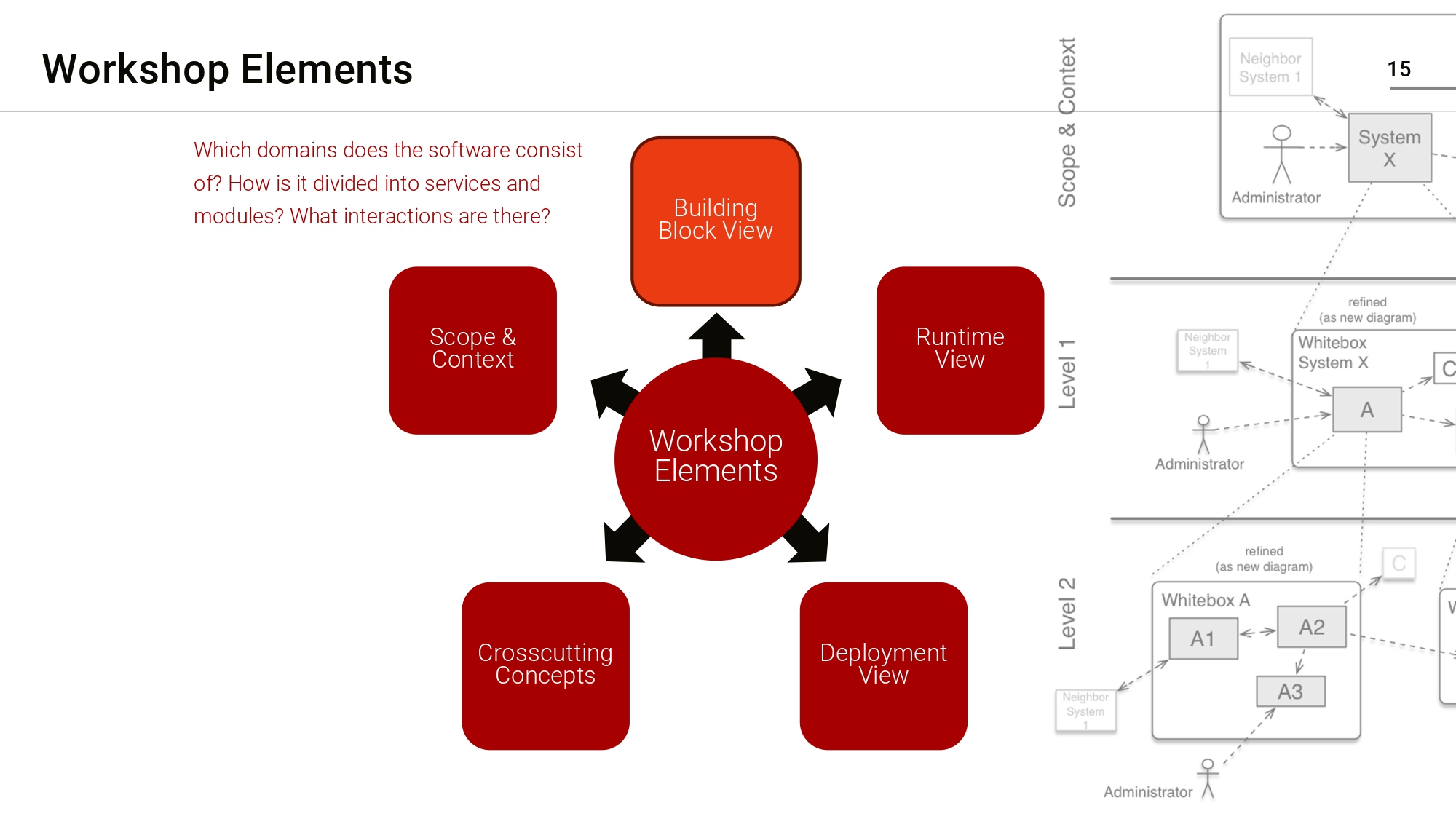
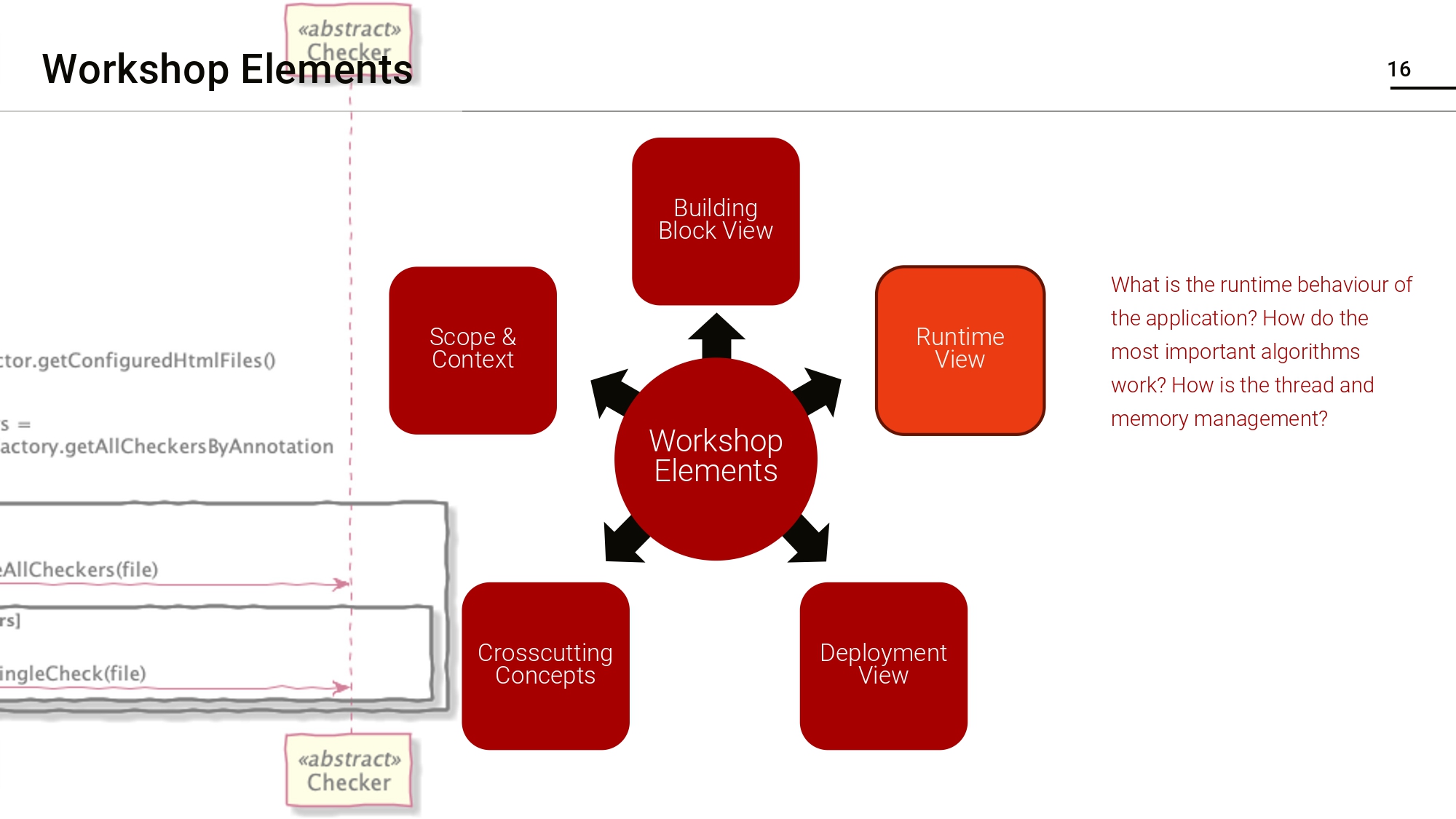
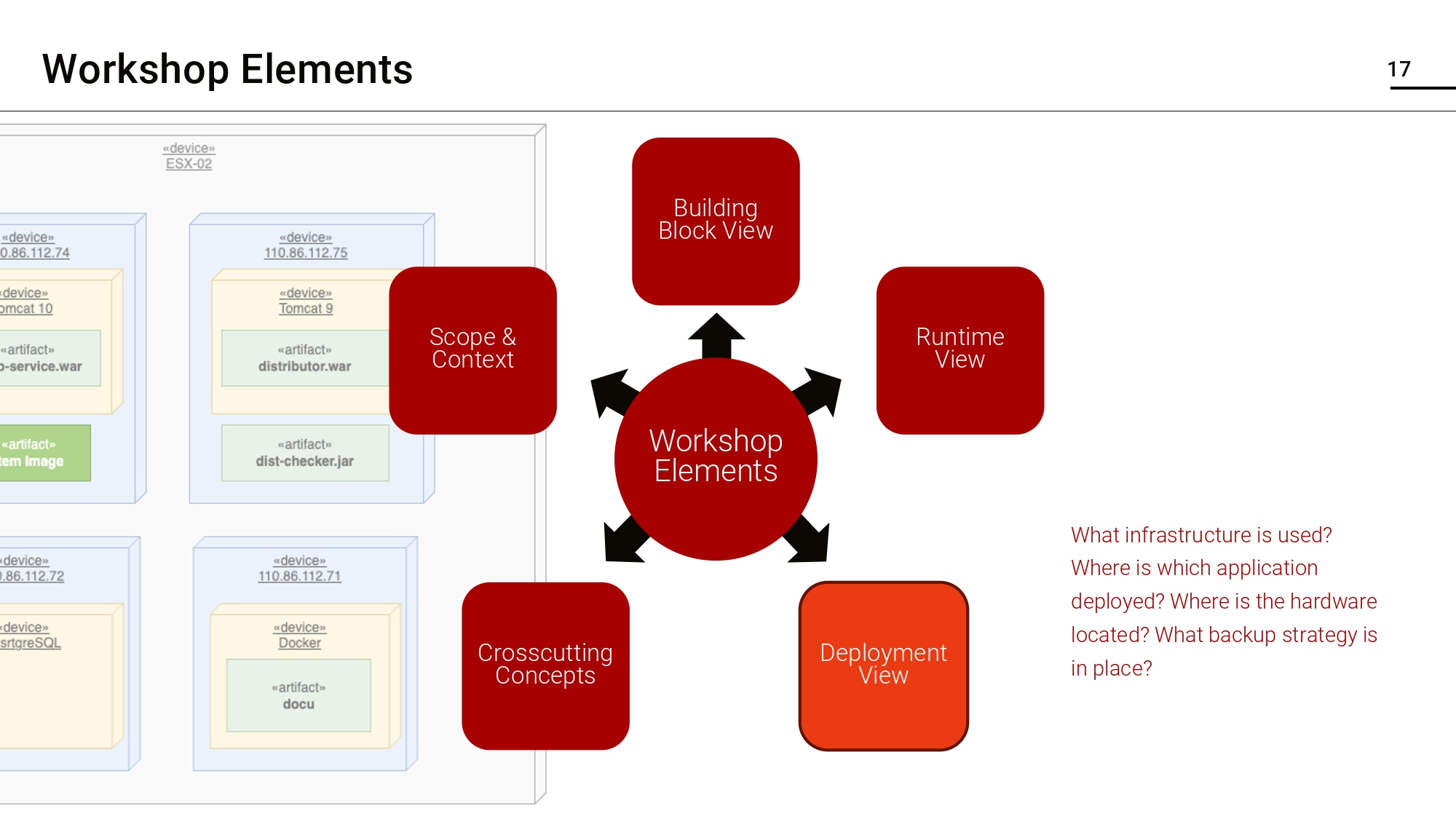
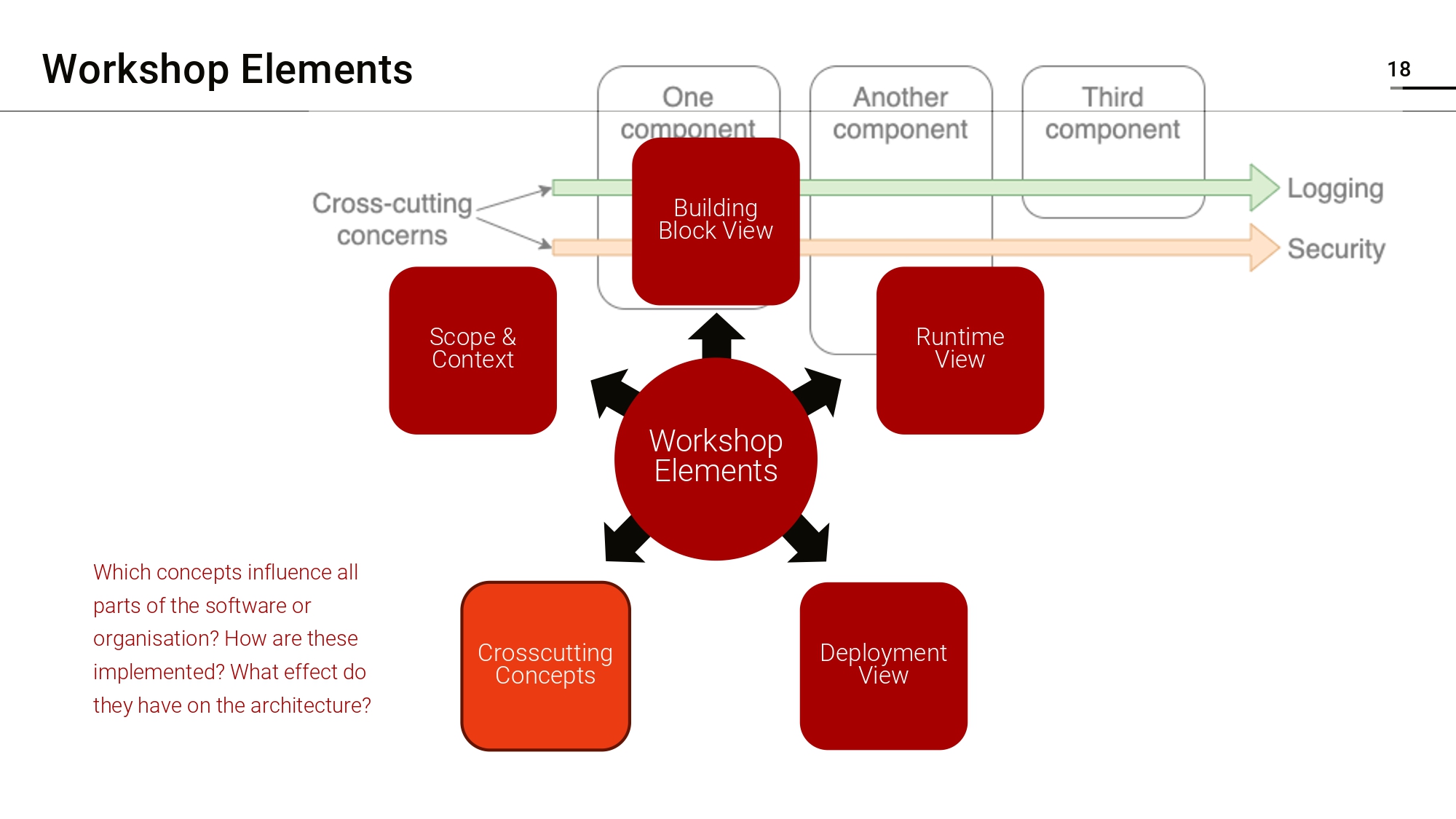
Comprehensive understanding of your software architecture requires examining all module boundaries, interactions, and integrations from various perspectives. With the development team, these elements are systematically modeled according to the established arc42 format . You receive a clear visualization of the static and dynamic components of your software, which also provides valuable benefit for future decisions.
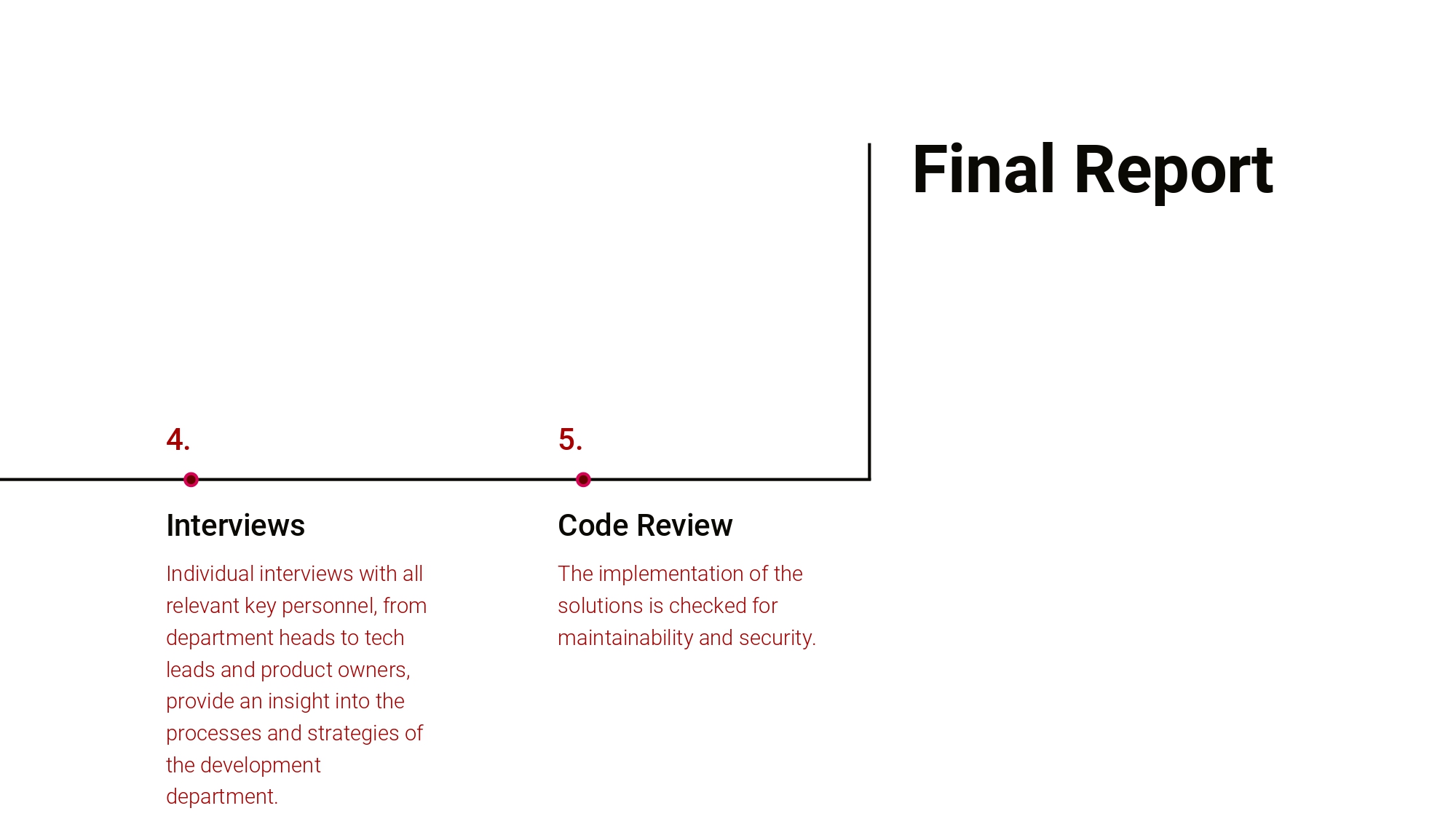
Expert Interviews
Gather perspectives: Understand the knowledge, goals, and challenges of key people.
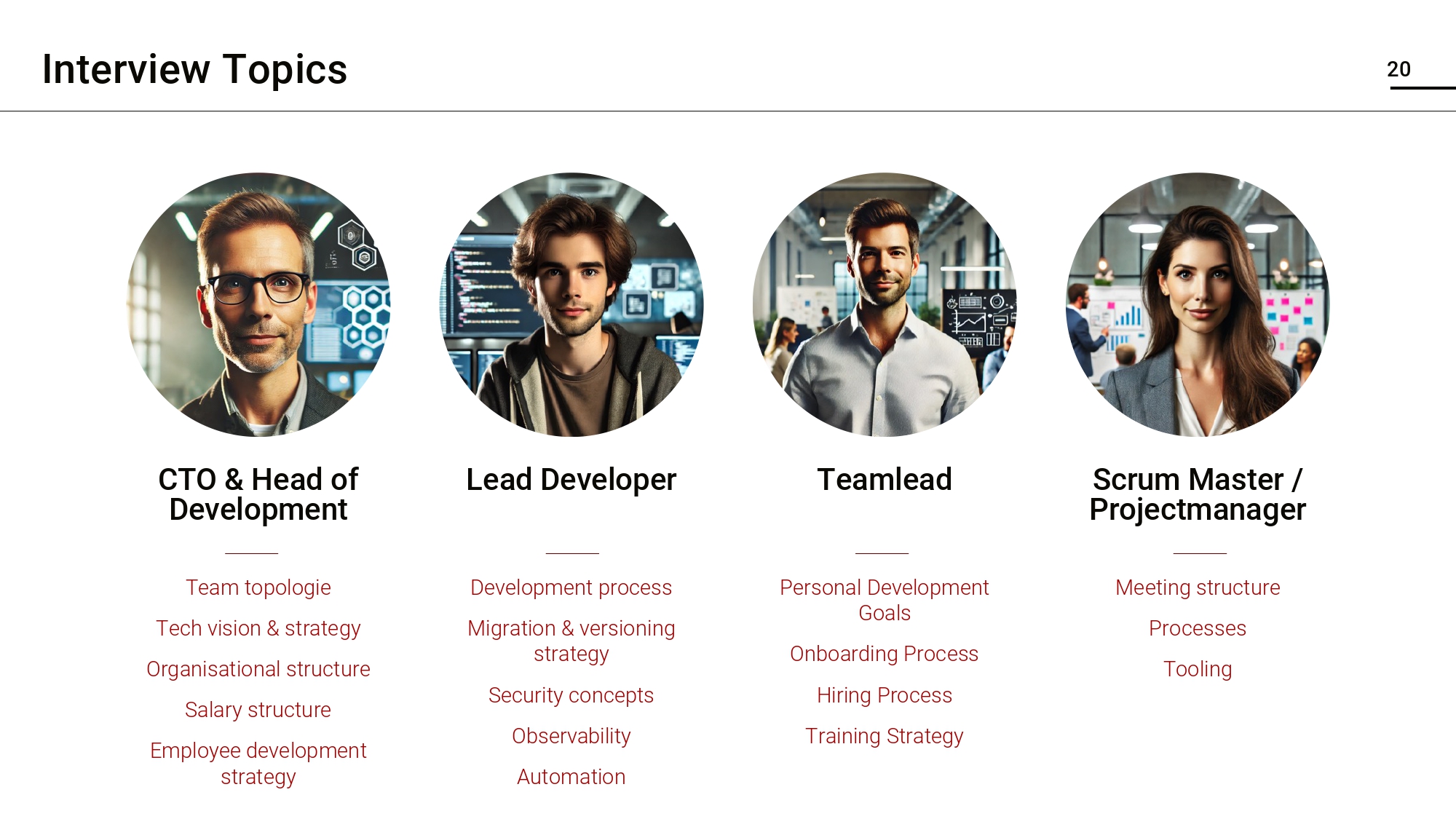
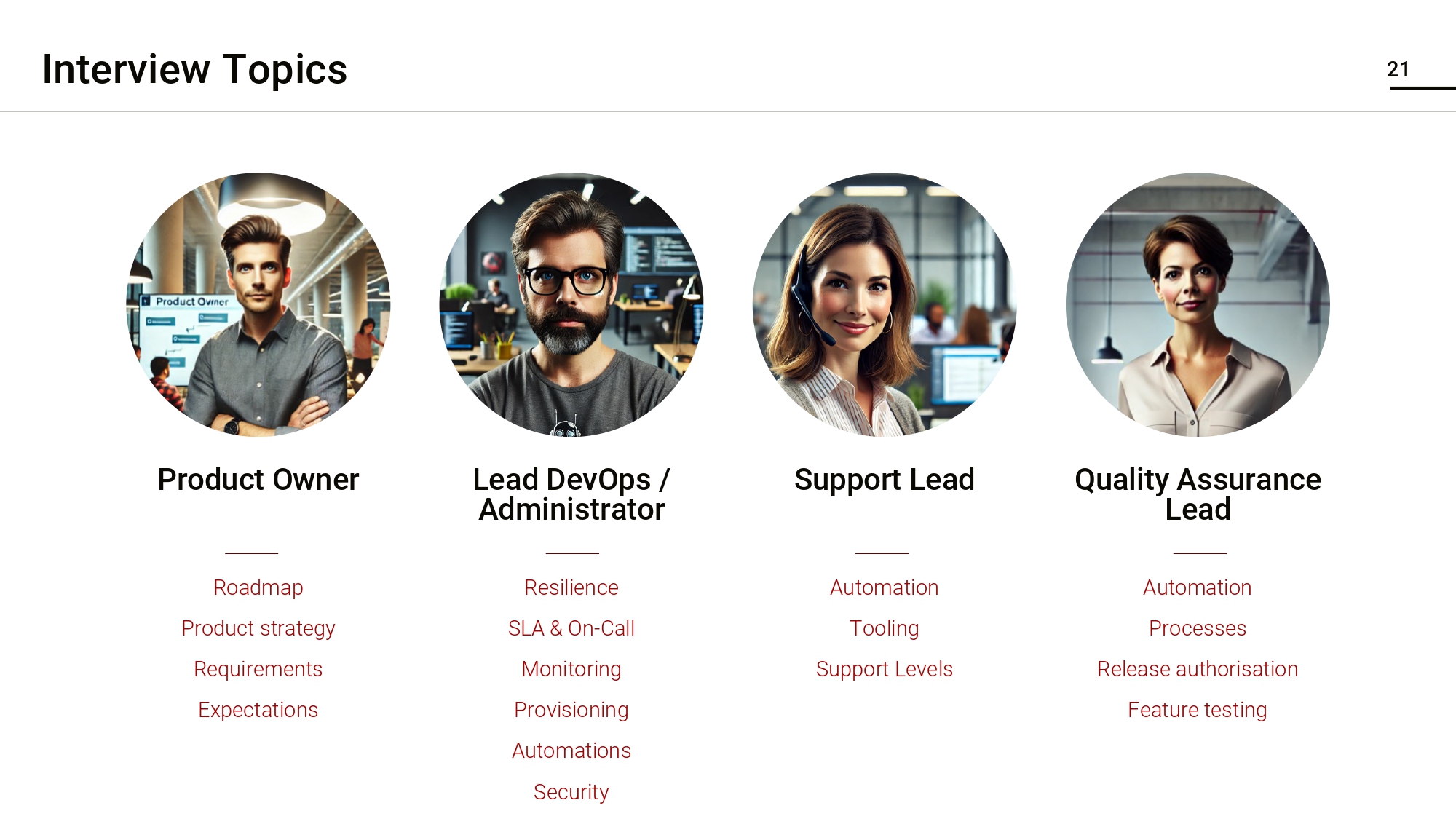
Through targeted interviews with key people from management, development, and support, the organizational maturity level is determined. This gives you valuable perspectives that purely technical analyses cannot provide. And you recognize where organizational improvements will have the greatest impact.
Code Review
Examine details: Analyze quality and implementation of core concepts in the code.
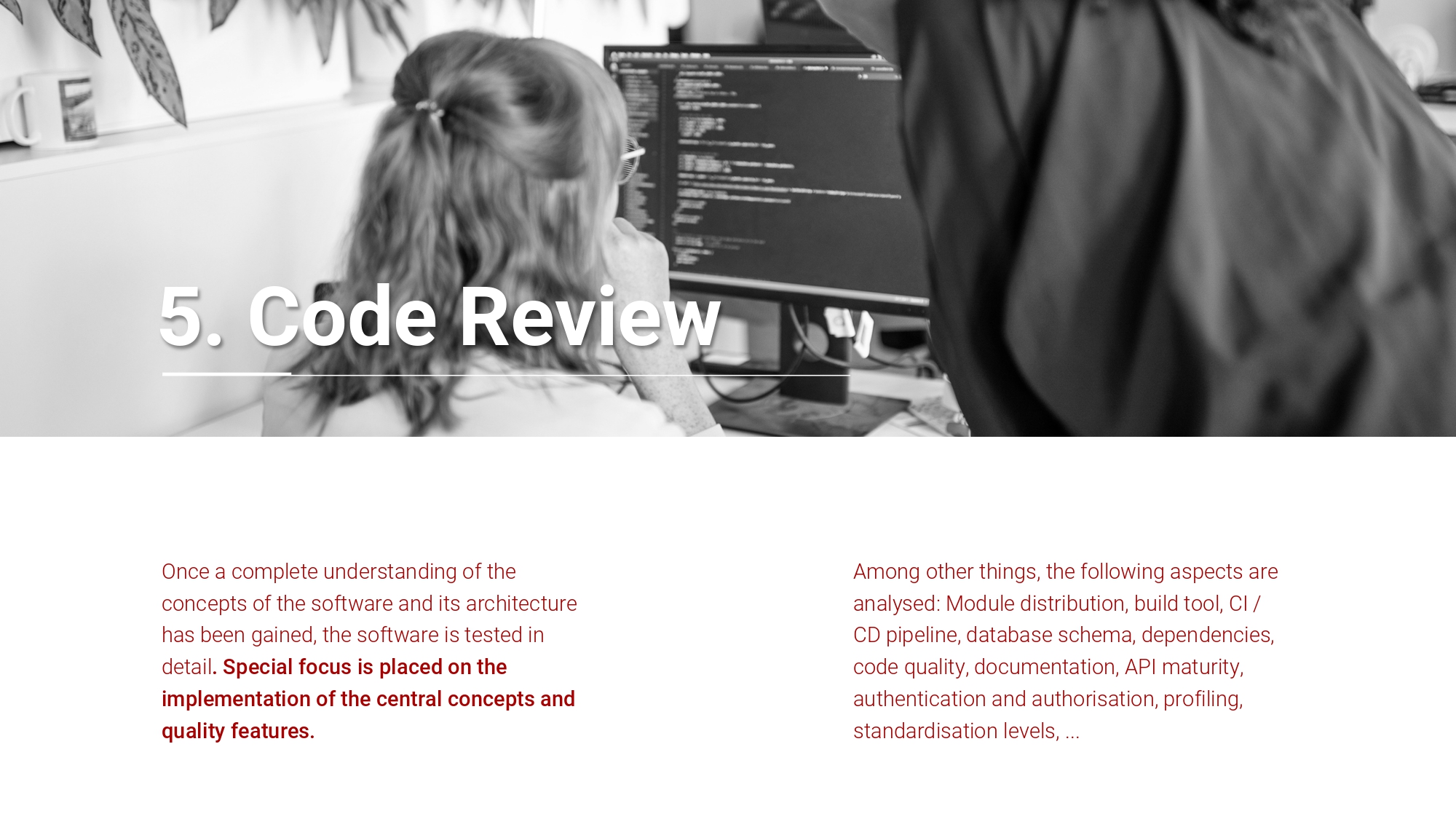
After gaining a complete understanding of the concepts, the software is examined in detail. Special attention is paid to the implementation of core quality characteristics. Aspects such as module distribution, build tools, CI/CD pipeline, database schema, dependencies, code quality, documentation, and API maturity are analyzed. You receive clear identification of strengths and improvement potential in your code.
Final Report
Everything documented: A clear summary with risk analysis and action recommendations.
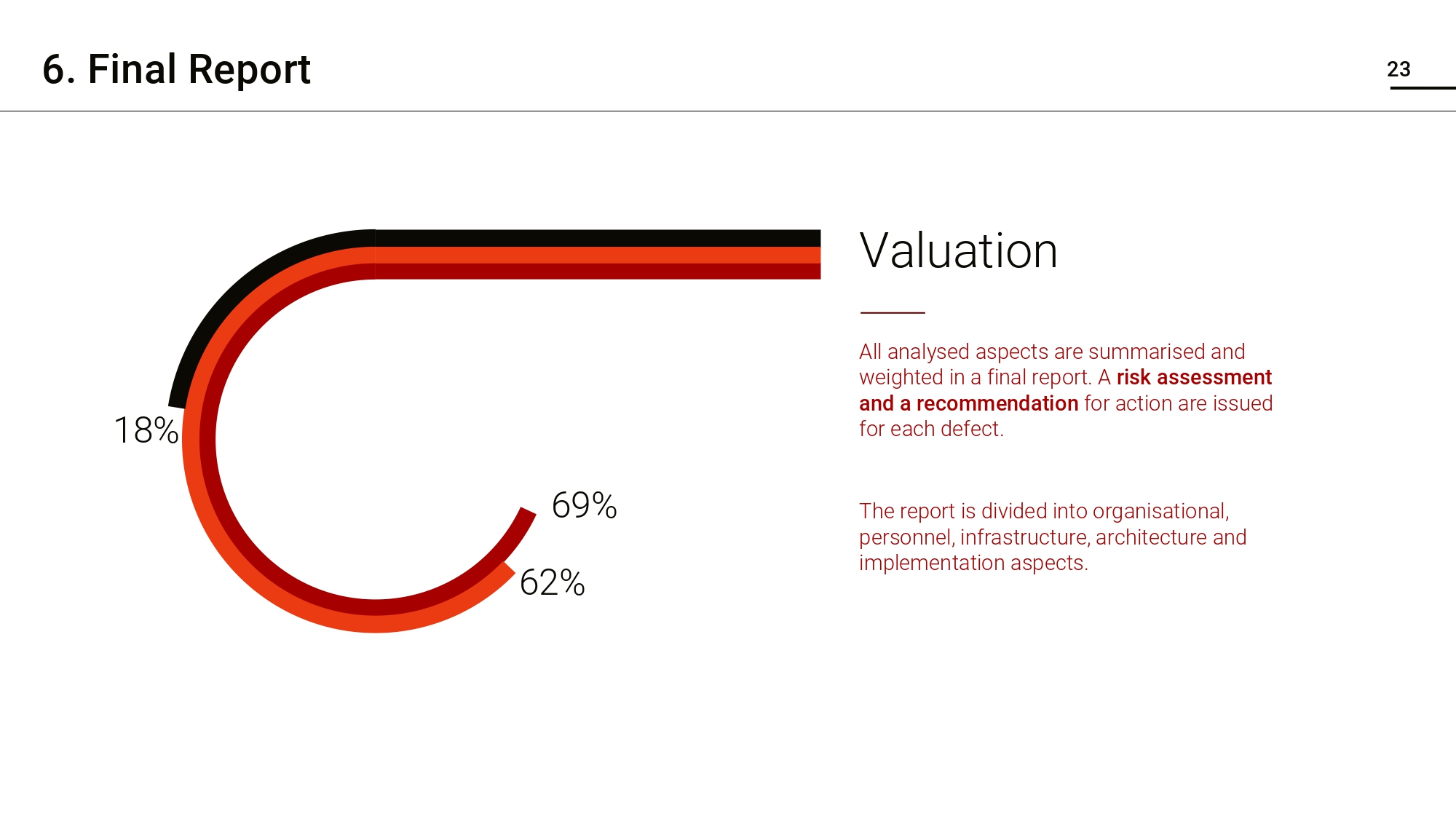
All findings are summarized in a clearly structured report. Each identified deficiency receives a concrete risk assessment and practical action recommendations. The report is systematically divided into organizational, personnel, infrastructural, architectural, and implementation-related aspects. You get a structured document that makes complex relationships understandable and serves as a solid roadmap for improvements.
Implementation
From analysis to practice: Support in implementing the improvements.
The final report is just the beginning. Upon request, you receive support in the practical implementation of the recommended measures. From versioning strategies to deployment automation to test coverage. You benefit from a flexible architecture adapted to your business needs that not only works today but is also equipped for future growth.
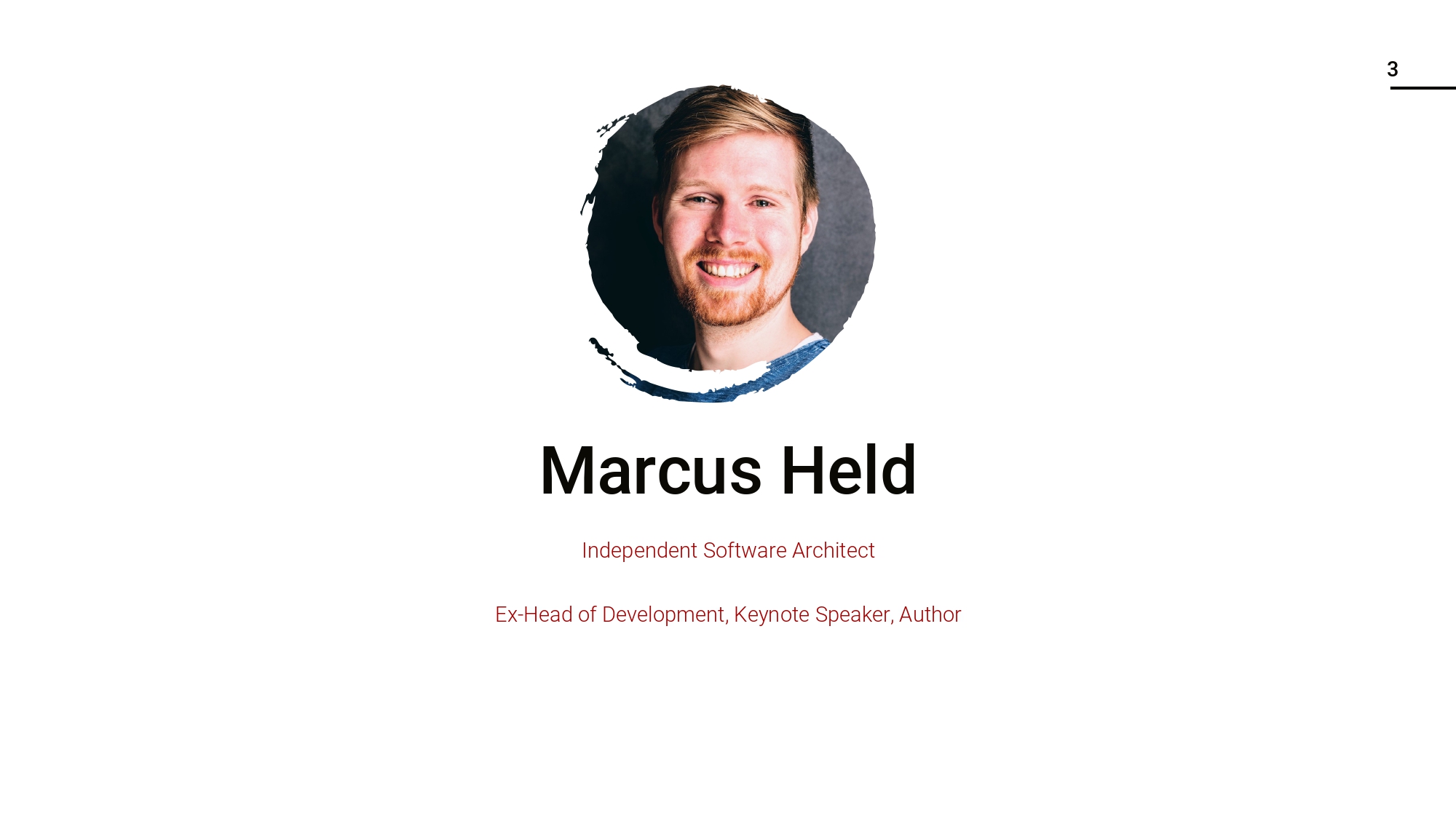
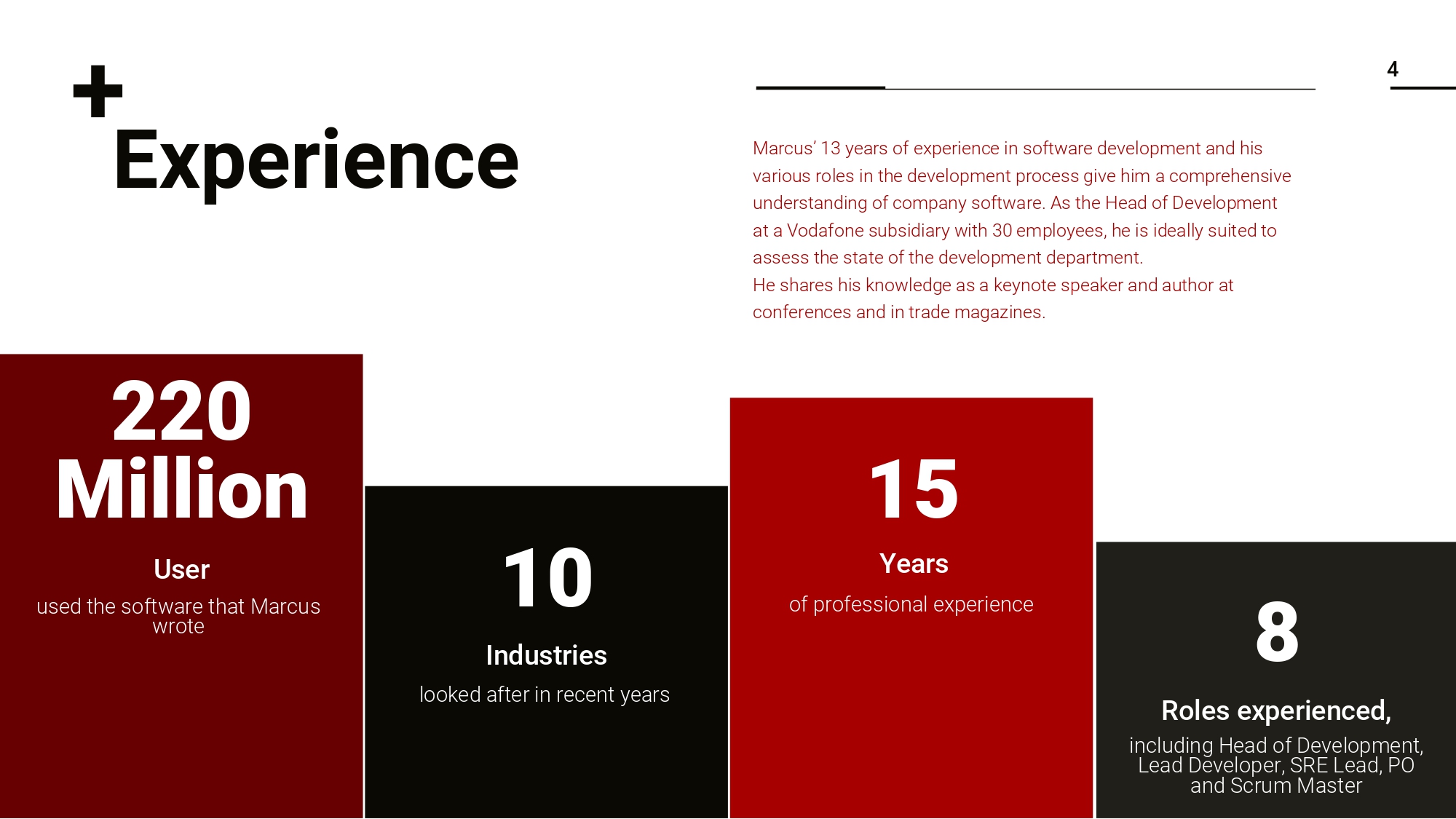
220 Million
Users using my software
10 Industries
served in recent years
15 Years
of professional experience
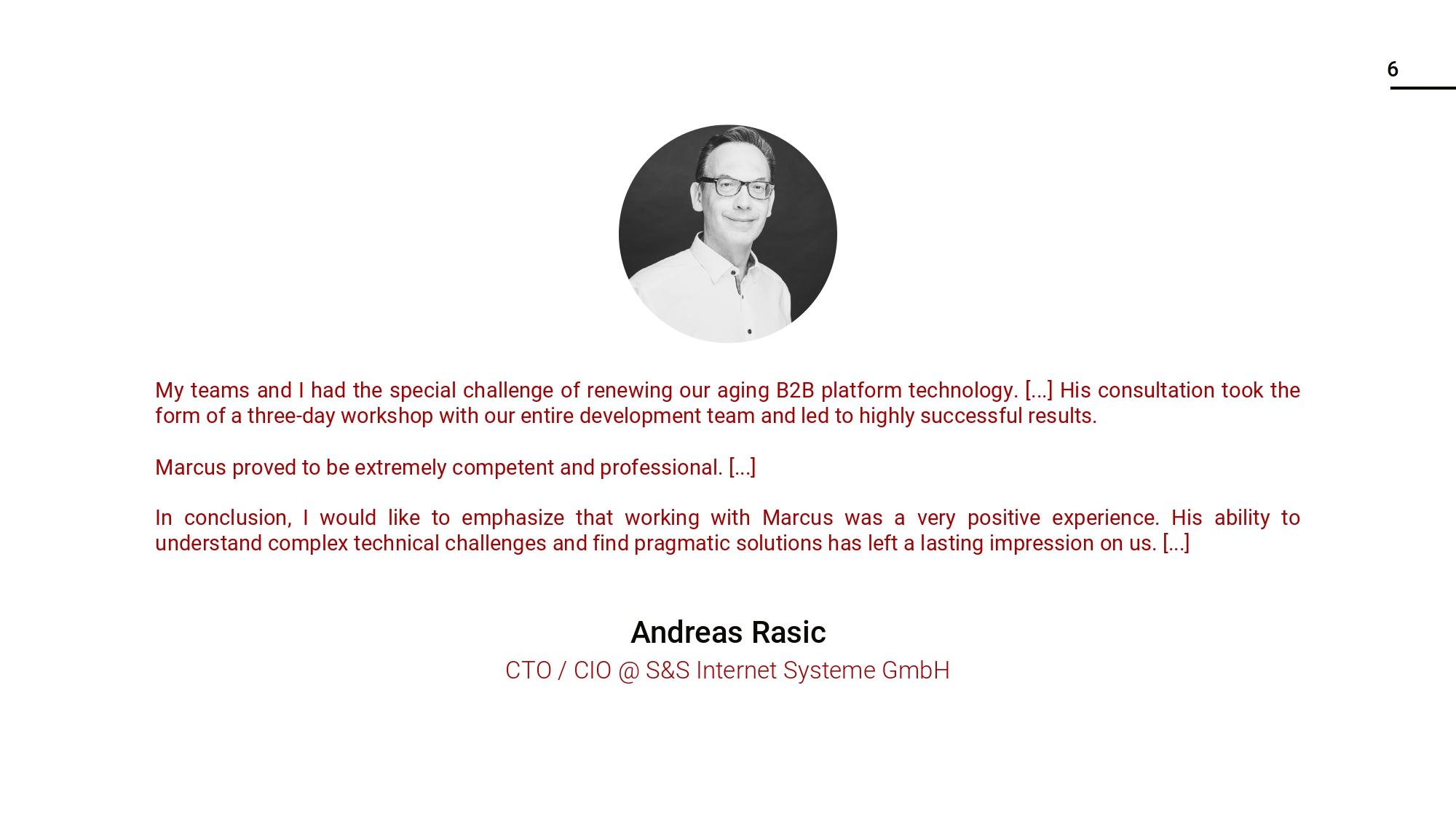
My teams and I had the special challenge of renewing our aging B2B platform technology. [...] His consultation took the form of a three-day workshop with our entire development team and led to extremely successful results.
Marcus proved to be extremely competent and professional. His solid knowledge and extensive experience contributed significantly to our ability to develop new concepts and refine existing ones, which have substantially improved our working methods and efficiency. [...]
In conclusion, I want to emphasize that working with Marcus was an extremely positive experience. His ability to understand complex technical challenges and find pragmatic solutions has impressed us sustainably. [...]

Andreas Rasic
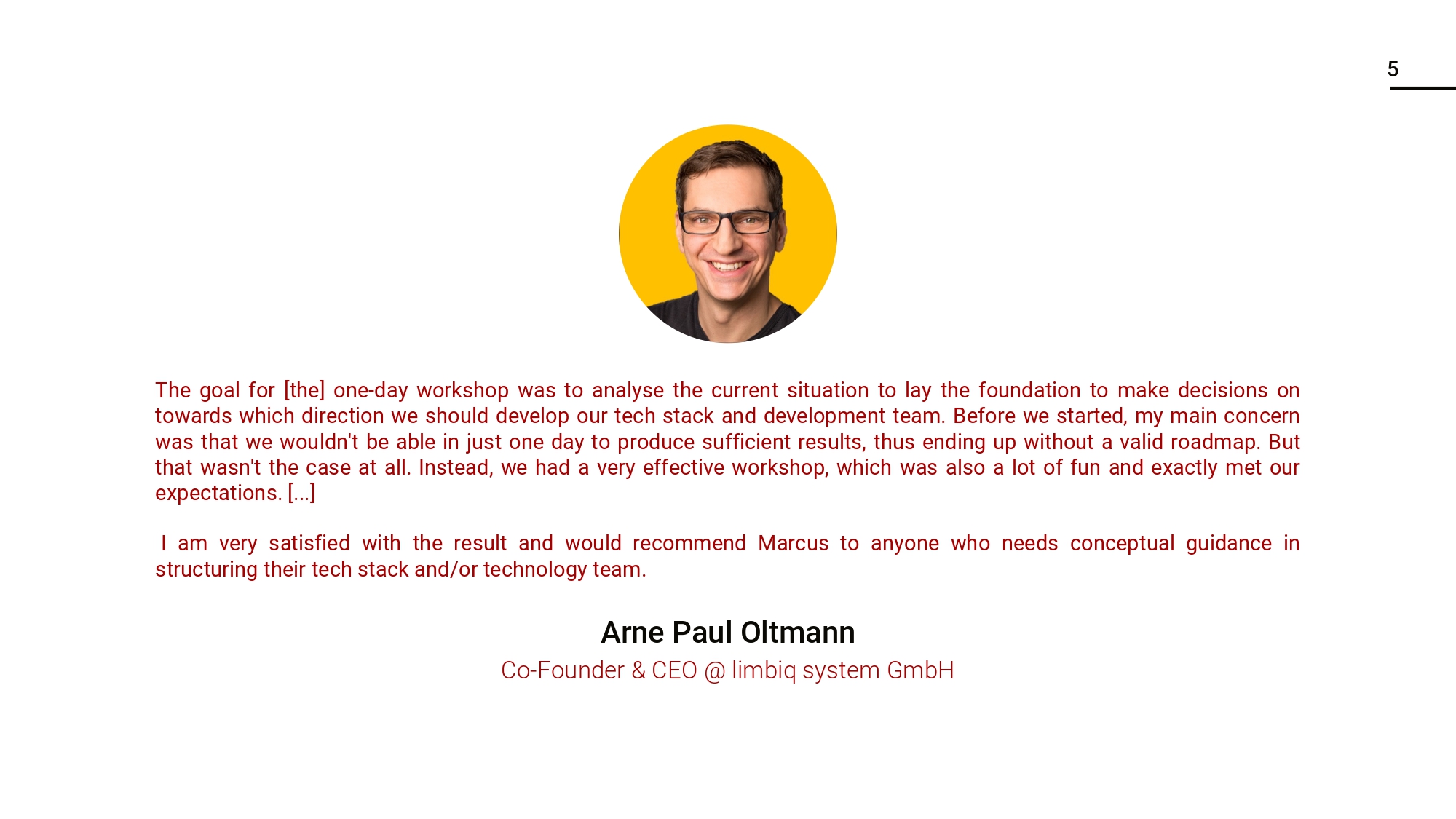
CTO / CIO @ S&S Internet Systeme GmbHIn the course of [a] one-day [Discovery] workshop, the goal was to analyze the current situation in order to make decisions based on this foundation about which direction we should develop our tech stack and development team. My biggest concern before the workshop was that we wouldn't be able to achieve valid results within just one day and would then be left without a roadmap afterward. But that was by no means the case. Instead, we had a very effective workshop that was also a lot of fun and exactly met our expectations.[...]
I am very satisfied with the result and would recommend Marcus to anyone who needs conceptual support in structuring their tech stack and/or technology team.

Arne Paul Oltmann
Co-Founder & CEO @ limbiq system GmbHThe Right Offer
Choose the review that fits your needs
Discovery
Give your team a boost. Ideal for small projects.
- Duration: 1 Day
- Business Context:
- Technology Overview:
- Architecture Workshop:
- Final Report:
- Code Review:
- Expert Interviews:
- Implementation:
Basic
Build the foundation for your roadmap in the coming year.
- Duration: 3 Days
- Business Context:
- Technology Overview:
- Architecture Workshop:
- Final Report:
- Code Review:
- Expert Interviews:
- Implementation:
Audit / Technical Due Diligence
Learn every detail of your software.
- Duration: Individual
- Business Context:
- Technology Overview:
- Architecture Workshop:
- Final Report:
- Code Review:
- Expert Interviews:
- Implementation: